Neem Oil Insecticidal Soap Spray
Soap knocks pests down; neem adds a few days of feeding disruption. Mix ratios, evening timing, and when plain castile is still enough.
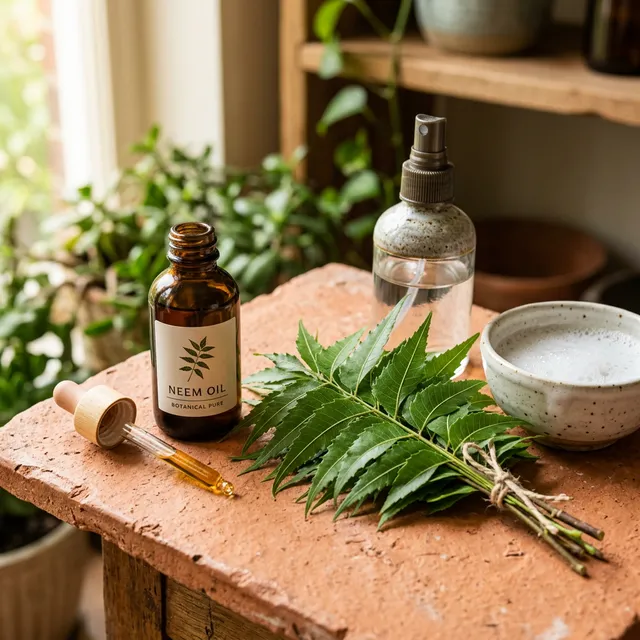
Why Add Neem Oil?
Plain insecticidal soap kills pests on contact, but once it dries, it’s done. Neem oil adds two critical advantages:
- Systemic action, azadirachtin (neem’s active compound) is absorbed by plant tissue and affects insects that feed on treated plants for several days
- Growth disruption, neem interferes with insect hormones, preventing molting and reproduction
Together, soap + neem is the most effective organic pest control combination available to home gardeners.
Ingredients Breakdown
Cold-Pressed Neem Oil
Look for cold-pressed or raw neem oil, not “clarified hydrophobic extract of neem oil” (which has the azadirachtin removed). The whole oil contains both the fatty acids and azadirachtin you need. The Garden Soap Team recommends Harris cold-pressed neem oil for its quality and value. Our best neem oil products for gardens guide compares cold-pressed concentrates.
Why the Soap Matters Here
Neem oil doesn’t mix with water on its own. The castile soap acts as an emulsifier, breaking neem oil into tiny droplets that stay suspended in water. Without soap, the neem just floats on top.
Instructions
Step 1: Warm the Water
Use warm (not hot) water, around 70-80°F. Warm water helps the neem oil emulsify better.
Step 2: Mix Soap and Neem
In a small cup, combine the castile soap and neem oil. Stir until they blend into a milky consistency. This pre-mixing step ensures even distribution.
Step 3: Add to Water
Pour the soap-neem mixture into your spray bottle. Add the warm water. Shake vigorously for 30 seconds.
Step 4: Use Immediately
Neem oil breaks down quickly once diluted. Use within 8 hours for maximum effectiveness. Don’t try to store it overnight.
Step 5: Apply
- Spray all plant surfaces, especially leaf undersides
- Apply until leaves are dripping
- Spray in early morning or late evening (never in direct sun)
- Check weather conditions before spraying
Application Schedule
Neem oil gives you slightly longer protection than soap alone, but you still need multiple applications:
| Application | When | Purpose |
|---|---|---|
| First spray | Day 1 | Kill current pests + start systemic absorption |
| Second spray | Day 5-7 | Catch newly hatched nymphs |
| Third spray | Day 12-14 | Break reproduction cycle |
| Maintenance | Every 14 days | Preventive treatment during pest season |
Tips for Best Results
- Shake frequently while spraying, neem tends to separate
- Don’t mix too concentrated, more neem ≠ more effective, but does increase burn risk
- Test first on a few leaves, wait 48 hours, some plants are sensitive to neem
- Store neem oil in a cool, dark place, it solidifies below 65°F (this is normal; warm it gently to re-liquify)
- Rain washes it off, reapply after heavy rain
When to Use This Over Basic Soap Spray
Choose the neem oil formula when:
- ✅ Basic castile soap spray isn’t controlling the infestation
- ✅ You’re dealing with fungus gnats (neem’s systemic action works in soil)
- ✅ You want preventive protection between spray applications
- ✅ The infestation includes multiple pest species
Stick with basic soap spray when:
- You’re near harvest (neem has a slight taste)
- Plants are in intense direct sunlight
- You prefer a less noticeable smell
Troubleshooting
Spray looks oily or separates quickly. The soap-to-neem ratio is off. Add another half tablespoon of castile soap and shake again. The soap is what keeps the neem suspended in water.
Leaves are turning yellow after spraying. You applied in too much sun or used too high a concentration. Rinse affected leaves with plain water. Next time, spray in the early morning or switch to the basic castile spray for sensitive plants.
Neem oil is solid in the bottle. Cold-pressed neem oil solidifies below about 65°F. Run the bottle under warm tap water for 2 minutes to re-liquify. Do not microwave it.
No visible results after two applications. Some pest populations need three full cycles to collapse. Look for slowed movement and fewer new nymphs as early signs. If no improvement after three sprays, the infestation may require a stronger intervention like horticultural oil or a different pest control approach.
Safety Warnings
- Toxic to aquatic organisms. Do not spray near ponds, streams, or rain gutters that drain to waterways.
- Avoid use on stressed plants. Drought-stressed or heat-stressed plants are more likely to suffer leaf burn from neem oil.
- Keep away from bees. Neem can affect beneficial insects. Spray when pollinators are not active (early morning or dusk).
- Wash edible crops. If spraying food crops, wash produce thoroughly before eating. Most neem residue breaks down within 1-3 days in sunlight.
- Pregnant or nursing. Consult a doctor before handling concentrated neem oil frequently, as azadirachtin has not been fully studied for prolonged skin exposure.
Listing checks before you buy
Soap + neem is two jobs in one tank. The Garden Soap Team reads labels for cold-pressed oil and a true-soap emulsifier — not a third bottle the listing will try to sell.
- When DIY soap is enough: Contact knockdown is the basic castile spray. Add cold-pressed neem when pests return between sprays, fungus gnats need a soil pass, or you want 3–7 days of feeding disruption. All-purpose foliar rates without the combined tank live on neem oil spray recipe for plants.
- Cold-pressed, not extract: Label must say cold-pressed / raw. Clarified extract is a suffocant, not azadirachtin. Compare bottles on best neem oil products for gardens.
- Soft water + emulsifier: Oil + hard water + no soap = broken mix and leaf spots. If the spray looks like slicks, do not apply it. Mechanism split: insecticidal soap vs neem oil.
- Concentration: About 1 teaspoon cold-pressed neem plus 1 tablespoon castile per quart. A “glug” scorches tomatoes. Evening only.
Common Questions
Is it safe to use this spray around pets and children? When used as directed, most homemade and commercial insecticidal sprays are much safer than synthetic alternatives. Always allow the solution to dry completely on the foliage before allowing pets or children back into the area.
How often should I reapply the treatment? For active infestations, applying every 4 to 7 days is generally recommended until the problem is under control. Once the pests are gone, you can reduce application to a bi-weekly preventative schedule.
Can I mix different garden treatments together? It is usually best to apply treatments separately unless explicitly directed by the manufacturer or the specific recipe. Mixing untested combinations can lead to unintended plant damage or reduced efficacy.
 ✓
✓ The Garden Soap Team writes every recipe and guide on this site. Formulas follow published horticultural guidance — university extension resources, the UC IPM program, and OMRI standards — and we cross-check concentrations and plant-safety warnings against documented gardener experience before publishing. No harsh chemicals, no guesswork passed off as expertise.
📚 Related Articles
 recipes
Neem Oil Spray Recipe for Plants
Cold-pressed neem plus castile as emulsifier: evening spray, 48-hour patch test, and why “neem extract” listings lack azadirachtin.
learnInsecticidal Soap vs Neem Oil
Insecticidal soap vs neem oil — which is better for your garden? Compare how they work, what pests they kill, and when to use each one (or both together).
guidesBest Neem Oil Products for Gardens: Complete Buyer's Guide
Buy cold-pressed neem for residual or mildew help — not as the first bottle for a small aphid colony. Check azadirachtin, not the listing title.