Insecticidal Soap for Indoor Plants
Garden Soap Team
· 8 min read
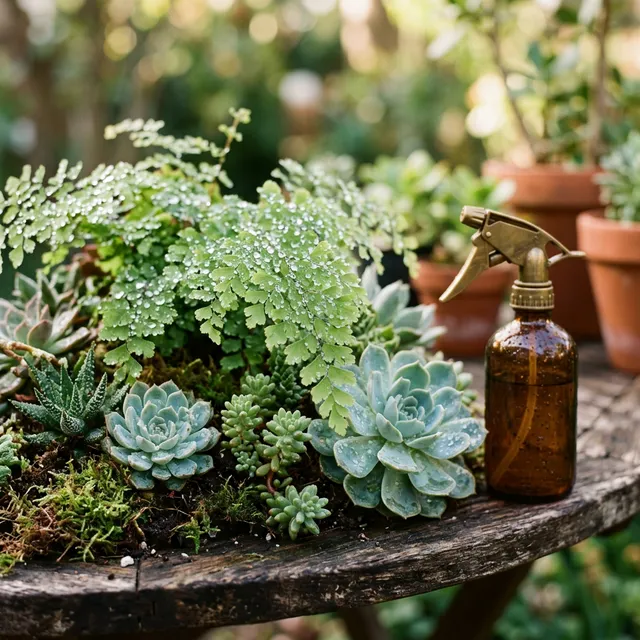
Indoor pest problems sneak up on you. One day your monstera looks perfect, the next you notice sticky residue on the leaves, tiny webs on your fiddle-leaf fig, or cotton-like clusters tucked into the joints of your jade plant.
The good news: insecticidal soap works just as well indoors as outdoors. But indoor plants need slightly different treatment because they grow in a controlled environment with less air circulation, no rain to wash them, and often weaker leaf tissue from lower light levels. For dilution tables, ventilation, and species-by-species caution, use the complete indoor plants soap guide.
The Garden Soap Team indoor protocol is below — bathtub, isolation, then pest-specific follow-ups. Dilution tables and species-by-species caution stay on the complete indoor plants soap guide.
Garden Soap Team buying notes
Indoor pests fail soap treatments when the mix is outdoor-strong, the larvae are in soil, or the host is a fern you soaped at 2%. Another RTU does not fix those.
- When DIY is enough: Aphids on winter herbs, mites on a dry monstera, and mealybugs you can wet are a 1 tablespoon-per-quart unscented castile spray in the tub. Buy a labeled soil tool (neem drench, Bti bits) for fungus-gnat larvae — foliar soap only knocks flying adults. Buy alcohol swabs for crevice mealy, not a second houseplant “pest spray.”
- Soft water vs hard water: Tap minerals leave white spots on indoor leaves and bind soap into scum. Distilled water is cheaper than a “houseplant-safe” second brand.
- Plant sensitivity: Indoor cuticles are thinner. Succulents, ferns, African violets, orchids, and calathea need half-rate or a swab. Patch-test. Never stack soap + neem + dish detergent in one bottle.
- Concentration: 1 tablespoon unscented castile per quart for most foliage; 1.5 teaspoons per quart on the sensitive list. More soap spots more furniture and more leaves.
Listing checks before you buy
Read the active and the life stage, not “indoor plant killer” in the title.
- Potassium salts / unscented castile. Foliar contact film. If the listing also promises soil larvae, fungus, and scale armor, that is a bundle or a different chemistry.
- Neem for a drench. Cold-pressed plus a soap emulsifier, mixed fresh. Compare: best neem oil products. Combo card: neem oil insecticidal soap.
- Trigger bottle. Fine mist, dedicated to soap — never a bottle that held glass cleaner. Gear notes: best spray bottles.
- Skip: scented castile, dish detergent, and “houseplant pesticide” RTUs that hide pyrethrin behind a leaf photo.
If last week’s pass did nothing, check coverage and pest ID on insecticidal soap not working before another cart click.
How to mix a houseplant tank without spotting furniture
The chemistry is the same 1% film. The indoor job is gentler rate, rinse, and a room that is not the sofa.
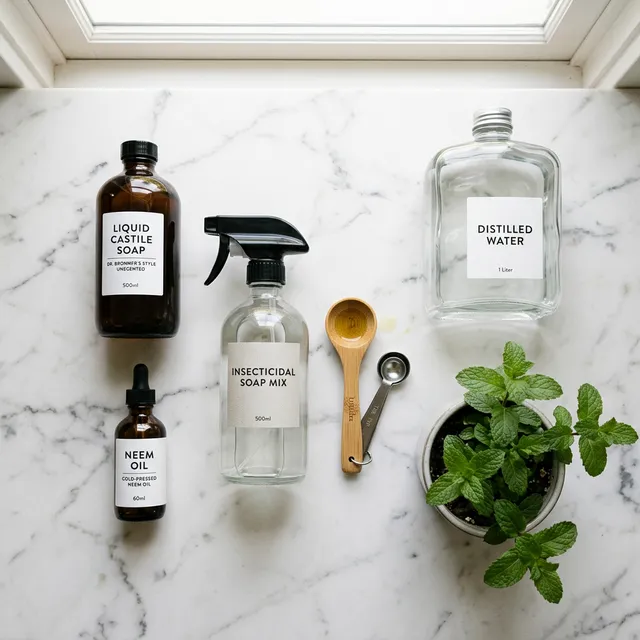
- Unscented, no essential-oil blend. The bottle this desk uses here is Dr. Bronner’s Unscented Baby-Mild. Why not Dawn: best soap for insecticidal spray.
- 1 tablespoon per quart of distilled water (half that on ferns, violets, calathea, succulents). Kitchen walkthrough: how to make insecticidal soap.
- Move the pot to a tub or sink. Spray tops, undersides, stems, and joints. Let the film sit 30–60 minutes, then rinse lukewarm. Dry film does not keep working.
- Isolate for two weeks. Treat neighbors in the same pass. Gnat larvae need a soil step — insecticidal soap for fungus gnats.
- Empty the bottle the same day. Diluted soap is not a windowsill concentrate.
Farina and half-strength succulent rules: insecticidal soap for succulents and houseplants. Burn list: plants sensitive to insecticidal soap.
Pests indoor soap covers (and soil stages it skips)
| Pest | Soap job | Buy or do something else |
|---|---|---|
| Mealybugs | Good on exposed cotton | Alcohol swab in joints first |
| Spider mites | Excellent if you wet the stipple | Raise humidity; mites love dry rooms |
| Fungus gnats | Adults only | Soil dry-down + drench/traps for larvae |
| Aphids | Excellent on new growth | Standard 1% film |
| Scale | Crawlers only | Scrape armor; soap does not dissolve shells |
If the listing says “kills indoor pests” and shows a flying gnat plus a mealy plus a beetle, read the actives. That is usually not potassium-salt soap alone.
Phytotoxicity on thin indoor cuticles
Most “soap ruined my houseplant” notes are rate, rinse, or a sensitive host.
- Outdoor 2% on an indoor fern. Indoor leaves lack UV-hardened wax. Start at 1% or 0.5%.
- No rinse. Residue clogs stomata and spots dark foliage. Rinse after the contact window.
- Saucer soup. Soap solution sitting on roots is not a gnat treatment. Dump the saucer.
- Closed room, coarse jet. Overspray stains wood; a coarse nozzle dumps rate on one leaflet. Fine mist, bathroom, window cracked: plant safety.
- Heat on a south window. Treated leaves sunburn. Keep out of direct sun for 24 hours.
When to skip a second RTU bottle
- You already own unscented castile and distilled water. A 24 oz “houseplant insecticidal soap” is the same film in a trigger.
- The pest is gnat larvae in wet soil. Buy a soil tool or change watering — not another foliar RTU.
- The host is African violet, farina succulent, or a wilted calathea. Swab or skip foliar. A hotter mix strips wax.
- You have not isolated or inspected neighbors. A new bottle will not stop the shelf next door.
Research-labeled street prices move. A pint of castile that mixes many indoor tanks usually beats a single RTU if you already own a fine-mist spray bottle.
Buying criteria for indoor soap gear
Shop the room and the stage, not a “houseplant care” bundle.
- Soap: unscented liquid castile or a labeled potassium-salt concentrate. Kitchen vs store: homemade vs commercial.
- Water: distilled or filtered — white film on a rubber plant is minerals, not a bad brand.
- Sprayer: fine mist, soap-only. One 32 oz bottle for a shelf; do not reuse a cleaner bottle.
- Not-soap SKUs: neem drench or Bti for larvae; alcohol for crevice mealy; a real scale plan. Do not buy a second RTU because gnats kept hovering.
The Indoor Insecticidal Soap Recipe
Use a gentler concentration for indoor plants:
- 1 tablespoon pure castile soap per quart of water (not 2 tbsp like outdoors)
- Dr. Bronner’s Unscented Baby-Mild is ideal, no essential oils that might irritate low-light plants
- Distilled water only, tap water minerals leave white spots on indoor leaves
Why gentler? Indoor plants develop thinner cuticles (waxy coatings) because they don’t face wind, rain, and UV exposure. Stronger concentrations can cause leaf damage that takes months to recover from in indoor growing conditions.
How to Apply Indoors (Without the Mess)
The Bathtub Method
The bathtub method is the desk default for houseplants:
- Move the plant to the bathtub or shower, or a large kitchen sink for smaller plants
- Spray all leaf surfaces thoroughly, tops, undersides, stems, and crevices
- Let it sit for 30-60 minutes, the soap needs contact time while wet
- Gently rinse with lukewarm water, this removes dead pests and soap residue
- Let the plant drain fully, tilt the pot to release excess water from the saucer
- Return to its spot, avoid direct sunlight for 24 hours after treatment
The Isolation Protocol
Indoor pests spread fast between plants on shelves and windowsills. When you find one infested plant:
- Isolate it immediately, move to a separate room
- Inspect all neighboring plants, within a 6-foot radius
- Treat ALL suspected plants at the same time
- Keep isolated for 2 weeks, reintroduce only after two clean inspections
Common Indoor Pests and Soap Treatment
Mealybugs
Where to look: Leaf joints, under leaves, along stems, cottony white clusters.
Treatment: Spray the clusters directly. For stubborn mealybugs in tight crevices, dip a cotton swab in rubbing alcohol and apply directly before spraying with soap. See our rubbing alcohol soap spray recipe and the mealybug soap schedule.
Spider Mites
Where to look: Fine webbing on leaf undersides, tiny moving dots, stippled yellowing leaves.
Treatment: Spider mites thrive in dry air. After soap spraying, increase humidity around the plant (group plants together or use a pebble tray). Mist leaves with plain water between soap treatments.
Fungus Gnats
Where to look: Small black flies hovering around soil, larvae visible in moist topsoil.
Treatment: Soap spray kills flying adults, but the larvae live in soil. Combine soap spray with a neem oil soil drench, add 1 teaspoon of neem oil and 1/2 teaspoon castile soap to a quart of water, then water the soil with it. Follow the soil-drying and trap steps in insecticidal soap for fungus gnats.
Aphids
Where to look: Clustered on new growth, stems, flower buds.
Treatment: Standard soap spray works great on indoor aphids. They’re especially common on herbs brought indoors for winter.
Scale Insects
Where to look: Brown or tan bumps on stems and leaf veins, they look like part of the plant.
Treatment: Adult scale has a hard shell that soap can’t penetrate. Scrape adults off with a fingernail or old toothbrush, then spray to kill the crawlers (baby scale) that emerge. Timing matters — see insecticidal soap for scale insects.
Indoor Plants That Handle Soap Well
- ✅ Pothos
- ✅ Spider plant
- ✅ Monstera
- ✅ Philodendron
- ✅ Peace lily
- ✅ Rubber plant
- ✅ Most herbs (basil, mint, parsley)
Indoor Plants to Be Careful With
- ⚠️ Succulents and cacti, their waxy coating is essential; soap strips it. Use the half-strength method in insecticidal soap for succulents and houseplants.
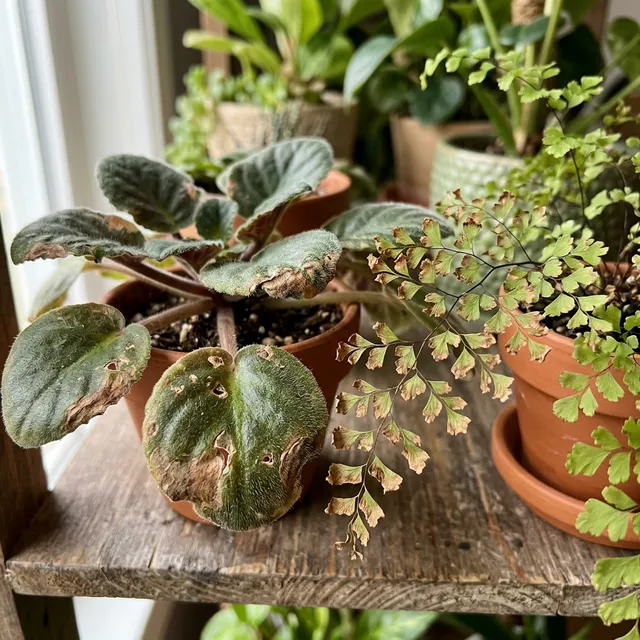
- ⚠️ Ferns, delicate fronds can brown from soap
- ⚠️ African violets, hairy leaves trap soap, causing spotting
- ⚠️ Orchids, use half concentration and test first
- ⚠️ Calathea, extremely sensitive; consider alternatives
For a complete list, see our plant sensitivity guide.
Indoor-Specific Tips
- Ventilate the room, open a window after spraying to help drying and prevent stale air
- Protect furniture, lay down old towels or newspaper under plants you can’t move
- Use a fine-mist spray bottle, coarse sprays waste solution and leave puddles
- Check drainage, excess soap solution in saucers can damage roots
- Don’t spray near food prep areas, treat in a bathroom or laundry room instead
- Temperature matters, spray when the room is 60-75°F for best results
Frequently Asked Questions (FAQ)
Is insecticidal soap safe for indoor use?
Yes, insecticidal soap is completely safe for indoor use. Unlike synthetic chemical pesticides, it has zero toxic fumes, leaves no harmful residues, and is safe around pets and children once dry. However, always test a small leaf first as some indoor plants are sensitive to the fatty acids.
Should I wash off insecticidal soap from my indoor plants?
Yes, it is highly recommended to gently rinse the plant with lukewarm water 30-60 minutes after applying insecticidal soap. Because the soap only works when wet, leaving the dried residue on the leaves doesn’t provide any extra protection and can clog the plant’s stomata.
Can I spray insecticidal soap on the soil?
No, spraying insecticidal soap on the soil is generally ineffective and can harm your plant’s roots. Insecticidal soap must make direct contact with soft-bodied pests to work. For soil-dwelling pests like fungus gnat larvae, use a neem oil soil drench or mosquito bits instead.
Prevention
After eliminating an infestation:
- Quarantine new plants for 2 weeks before adding to your collection
- Inspect weekly, catch problems early when they’re easy to treat
- Wipe leaves monthly with a damp cloth, removes dust and tiny pests
- Maintain humidity, dry indoor air favors spider mites
- Don’t overwater, soggy soil breeds fungus gnats
Frequently Asked Questions
Is insecticidal soap safe for indoor plants? ▼
Yes, when used at the correct concentration (1 tbsp castile soap per quart of water). Indoor plants tend to be more sensitive because they lack UV-hardened leaf coatings, so always patch test first and use unscented soap.
How do I apply insecticidal soap indoors without making a mess? ▼
Place the plant in a bathtub, shower, or large sink. Spray thoroughly, including leaf undersides, then let the plant drain for 30 minutes before returning it to its spot.
Can insecticidal soap kill fungus gnats? ▼
Insecticidal soap kills adult fungus gnats on contact, but the larvae live in soil where soap spray doesn't reach effectively. For fungus gnats, combine soap spray (for adults) with a neem oil soil drench (for larvae).
 ✓
✓ The Garden Soap Team writes every recipe and guide on this site. Formulas follow published horticultural guidance — university extension resources, the UC IPM program, and OMRI standards — and we cross-check concentrations and plant-safety warnings against documented gardener experience before publishing. No harsh chemicals, no guesswork passed off as expertise.
📚 Related Articles
 guides
How to Make Insecticidal Soap at Home
Core 3-ingredient method: 1 tablespoon unscented castile per quart, leaf-underside coverage, and the mixing mistakes that burn plants.
guidesInsecticidal Soap Plant Safety Guide
Insecticidal soap is gentle — but not on every plant. Learn which plants are sensitive, how to protect them, and safe application tips.
 learn
learnPlants Sensitive to Insecticidal Soap
Not all plants can handle insecticidal soap. This complete list shows which plants are sensitive, how to protect them, and safer alternatives.